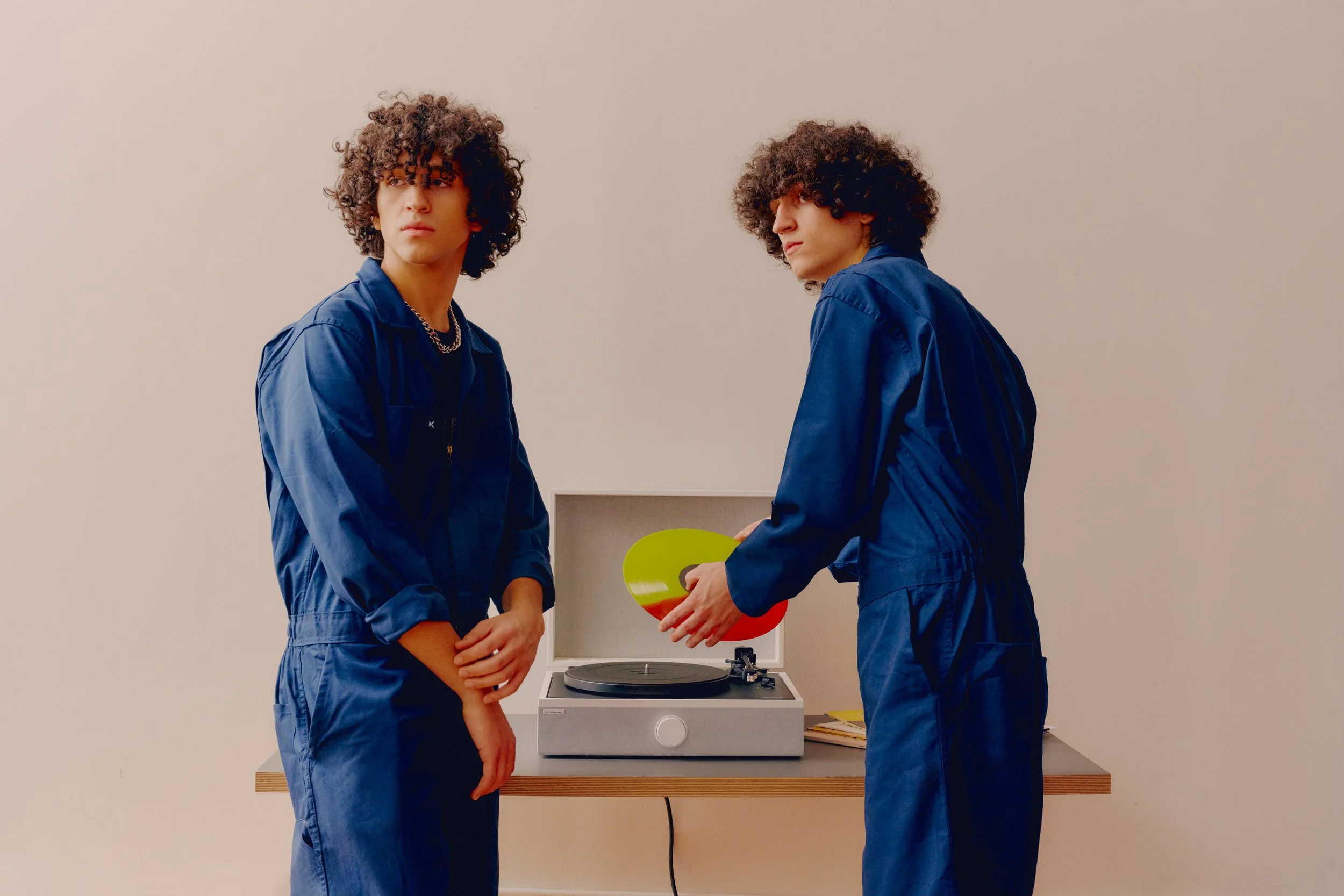
“REINTEGRATION SICKNESS” stopped us in our tracks when we first heard it, so we wanted to get to know the brothers behind it. Zohar & Adam Cabo, 19 and 21, started playing together at five and seven, covering Hendrix and Zeppelin in a family band with their sister and mom. Things opened up during the pandemic, when they began spending more time jamming and improvising together. Now their music moves freely through jazz, hip-hop, neo-soul and electronica, with influences ranging from Chick Corea and A Tribe Called Quest to Hiatus Kaiyote. Their debut album Osmosis, out November 6 via Mack Avenue Records, brings that mix together with guests including Christian McBride, NORY, J3PO and Skylar Tang. Ahead of its release, we spoke about their musical upbringing, the unpredictable moments that make their live shows tick, and finding ways to stay present in a world glued to its phones. They also left us with a few Good Calls, from artists worth hearing to animation worth watching.
Hello, thanks for doing this. You’re only 19 and 21. When did you first start playing and making music together?
We started playing music together when we were about 5 and 7 years old. We used to have a family band with our sister on guitar and lead vocals while our mom played bass. We’d be doing Jimi Hendrix and Led Zeppelin covers as well as some original pop/rock material. It wasn’t until the pandemic that we started really jamming and improvising together.
You grew up in a musical family. What did that actually look like in your house? Was music constantly being played? And if so, what were some of the staples or songs that really connected with you at a young age?
Not only was music constantly being played around the house, but our parents made it a big priority to take us to see live music from a very young age. The first show we ever saw was Eddie Palmieri band in Prospect Park. We were about 7 and 5 years old then.
Do you even think about genre when you’re making music?
It depends, most of the time I’d say no. We're just going with whatever feels good in the moment. That being said, we try to change the creative process a lot which leads to different outcomes so we might have a specific song and try to capture a vibe.
You’ve mentioned Chick Corea, Herbie Hancock, D’Angelo, A Tribe Called Quest, MF DOOM, and Hiatus Kaiyote as influences. Is there one artist or record that completely changed how you thought about making music? Ron Carter playing with ATCQ still blows our minds!
It has to be Hiatus Kaiyote’s “Choose Your Weapon”. Everything about this record influences what we create from the arrangements and sonic-worldbuilding to the post-production and mixing. We like to think that we carry the same intent of inviting the listener to open up and become fully immersed in what they’re hearing.
There’s obviously a huge amount of musicianship behind what you do, but the music never feels like you’re just trying to show people how good you are. Is finding that balance something you think about?
Definitely, at our shows before we go on stage we’ll always talk about dialing back the amount of information we’re saying in the music. Whenever we do that we always feel that the show is well balanced in that way. Also, “silence” has always been an important tool in our writing.
You’ve described yourselves as “disaster artists” onstage, which we love. What does that mean to you?
To us, that seemed like the most fitting term, a lot of times it feels like we’re walking this tightrope where it feels like we could fall any second. These are the moments of our shows that are completely improvised and the audience can feel that tension too, it ropes them in.
How much of what happens live is actually planned? Are there moments where one of you genuinely has no idea where the other is about to take the song?
Totally, a lot of times we have these specific goals or checkpoints that we hit that make the song the song. Everything in between is open, one of us always has the liberty to take a sharp left turn and we’ll be in a totally different place than we were before. The goal is to always meet on the same plane though, that way the decision making is justified within the world of each song.
We love “REINTEGRATION SICKNESS”! What has the reaction been like since its release?
Thank you, that's very nice of you. We’ve had a lot of great feedback, this really felt like the first song that really introduced the ever-evolving sound that is becoming Zohar & Adam. At the end of the day we feel blessed to have people listening to our music and tell us that it makes them feel something.
You’ve said “REINTEGRATION SICKNESS” came from the struggle to stay present in a world where our attention is constantly being bought and stolen. Was there a particular moment when that idea started becoming a song?
In the making of the song I (Zohar) went all around the city/upstate with a stereo mic and captured all these different environments. Everywhere I went I hardly saw anyone taking in the physical space around them. All of them were sucked into the void of their phones. That’s where the idea started.
You’ve also said music is one of the things that pulls you back into the present. Does playing actually shut everything else off for you?
Absolutely. At this point of our relationship with the language we have built with each other and the time spent playing individually, this feels inescapable.
The video for “REINTEGRATION SICKNESS” feels very intentional and almost like an antidote to the hyper-digital world the song is about. Can you tell us about the idea behind it and why returning to analog was important?
We believe that we are currently living through an epidemic of hate in these unnaturally fast paced lives. Everyone is always trying to get that next hit of dopamine. With analog materials, it’s a process. You have to record to film then record the whole tape as it plays through. People try to recreate this analog feeling with filters but it’s never the same.
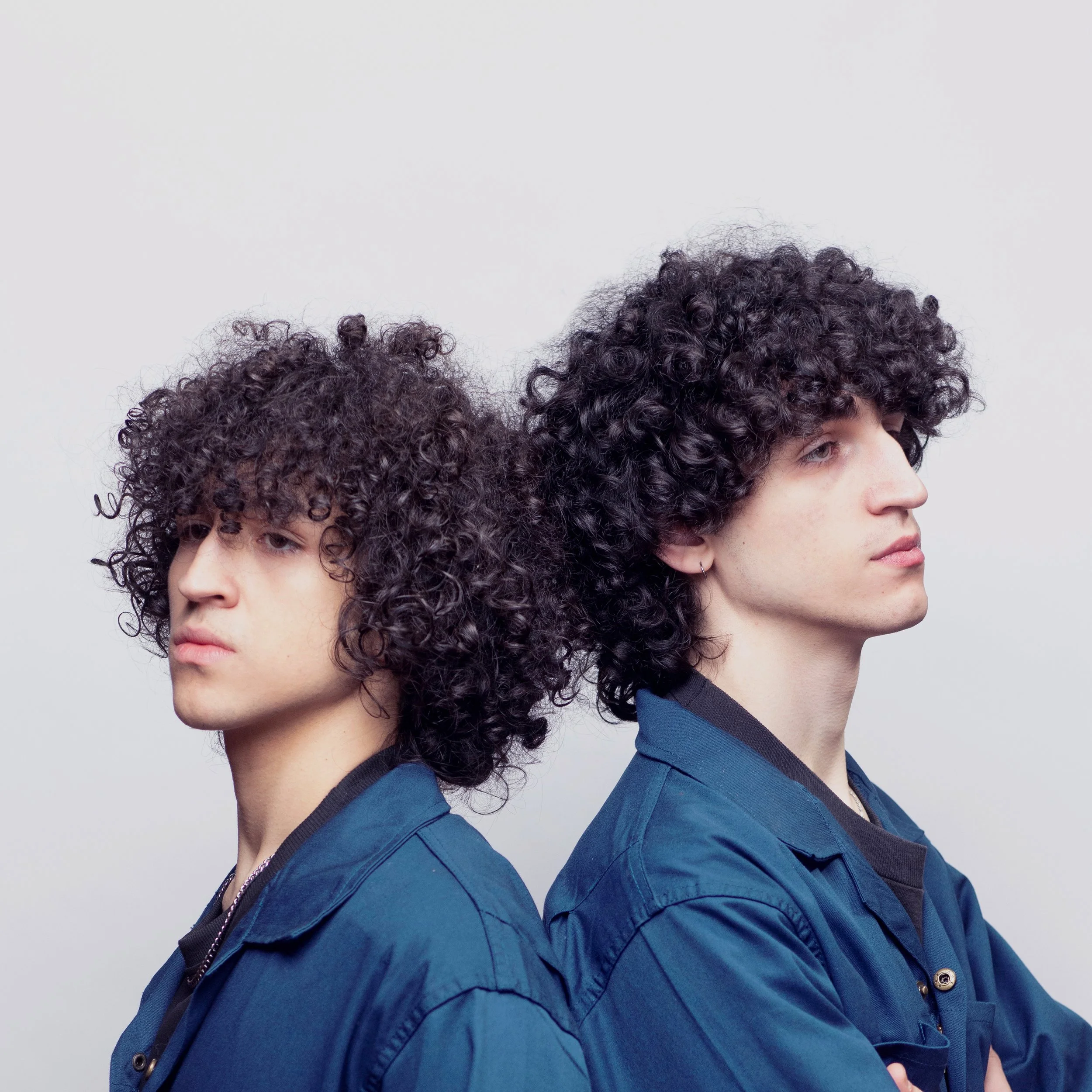
Now is the time to pull inspiration from everything around us.
“LATENCY” feels like a natural companion to “REINTEGRATION SICKNESS.” Why did you decide to release the two songs together?
The artistic hunger and constant number battle that Amiri wrote about felt very reminiscent of our own career paths. It only felt right to pair them together with the similar subject matter.
How did Amiri Moreno become involved with “LATENCY,” and what did they bring to the track?
I have some friends that went to Berklee alongside Amiri, after a session at SUNY Purchase’s A Studio with Ben Cuomo. We left the session and I turned to Adam and said we gotta get Amiri on this. I reached out to some friends who eventually connected us.
You opened for artists like Norah Jones, Gregory Porter, and Christian McBride while you were still teenagers. Was there a particular show where you thought, “Oh shit, this might actually be our life”?
To be honest, that moment always changes. Most recently our first show out of the U.S. opening for Marcus Miller’s Tribute to Miles, was an “oh shit” moment for sure. Getting on stage in front of 2,300 people and doing our thing proved to us that we’re capable of playing anywhere.
Are there some current artists you’re really excited about right now?
Nala Sinephro, Liim, Telemakus, smush, Flawed Mangos, Children of War, Takoda, ZEP, Deadharrie, Lord Sko.
Jazz has obviously been evolving forever, but it feels like there’s a particularly exciting generation of young artists right now who don’t see many boundaries around what jazz can be. Do you feel like you’re part of a larger movement happening right now?
100%. Now is the time to pull inspiration from everything around us. In a time when any sound is at the tip of your fingers how can you not be influenced by a wide variety of music and cultures. When we look around us at people like Kassa Overall, Ely Perlman, Nubya Garcia, and so many others. It’s nice to see the good company we’re in.
You grew up with essentially every kind of music ever made available to you instantly. Do you think that’s changed what it even means to be a “jazz musician” for your generation?
With the presence of social media and the digital age of streaming, there’s no way to not be constantly influenced by the other musicians around you and everything that came before. When you look at festivals nowadays, the term “Jazz” is already shifting and stretching for all the different kinds of artists that are being directly influenced by it. We are no exception to that.
Have you or the band had a “happened for a reason” moment recently — something that felt like a setback at the time but ultimately worked out for the best?
Unfortunately, our weekly improvised jam “The Everything Jam” in upstate NY just got cancelled due to the venue shutting down. At first it was a massive bummer, but then the whole community came together and showed us that no matter where we take it next, they will still come out to support and create with us. Also we have been doing that for around 6 months so it’s kinda nice to have our Sundays free for a little bit haha.
Is there someone you’d like to collaborate with, either within music or outside of it — art, film, or something else entirely?
We’d love to collaborate with Willow, her writing feels divine. Outside of music we’d LOVE to work with Joe Bennett specifically for his animation work on Scavengers Reign.
Lastly, can you give us a few Good Calls — an artist, record, film, book, place, food, or anything else you think people should know about right now?
The Artist Rooster, he is a cracked out analog visual artist and one of our favorite collaborators. Go check out the “Tehching Hsieh Lifeworks” exhibit in the basement of Dia Beacon. If you haven’t seen any of Joe Bennett’s shows, you have to see Scavengers Reign, Common Side Effects, and his upcoming show Dealies. The visuals in these shows are unmatched in creativity and detail.
Photo credit: Evelyn Freja
Follow Zohar & Adam at @zoharandadam