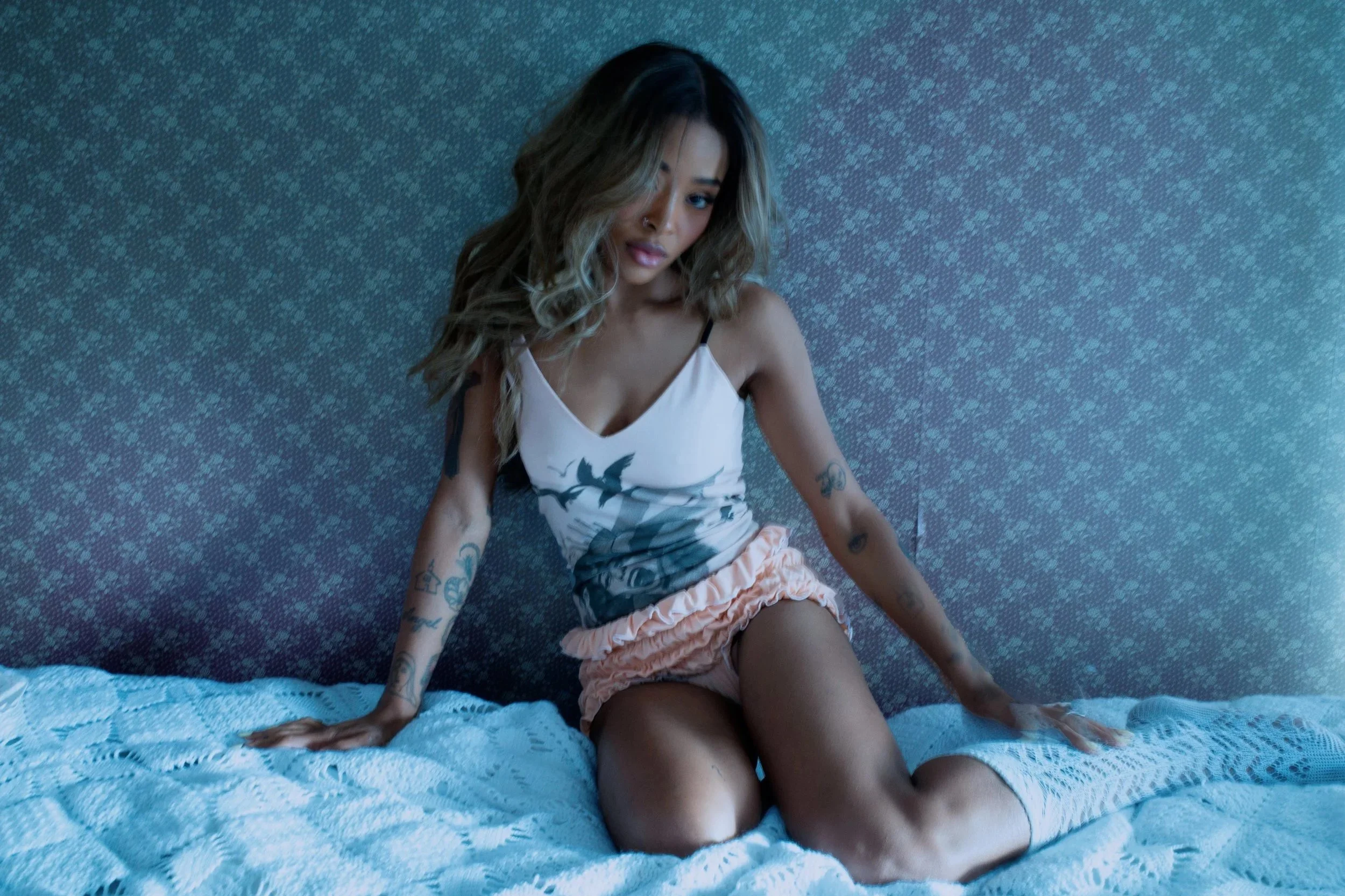
Back to the Center

On Songwriting, Memory, and Place — On the Line: Maya J’an
Maya J’an has spent years helping shape other people’s moments — writing in rooms with major artists, building songs that traveled far before her own name was attached to them. Now she’s stepping forward with a release of her own.
Her Warner Records debut, “cul-de-sac,” doesn’t feel like a carefully staged introduction. It feels personal. Written after the 2025 Los Angeles fires, the song traces back to Maya’s upbringing in Pasadena and the strange mix of nostalgia, grief, and tenderness that comes with seeing familiar places changed or gone. It’s intimate and cinematic without trying too hard to be either.
If the track feels lived-in, it’s because Maya’s songs rarely start in the studio. They usually begin as private reflections — small fragments she later turns into something melodic and shareable. That openness has already built her a loyal online audience, many of whom had been waiting for this release after she teased an early snippet months ago. It’s the same emotional honesty that’s made her such a valued collaborator behind the scenes.
Outside of the music, Maya is also using the moment to spotlight Altadena Girls, a grassroots organization supporting young people affected by the fires — a reminder that art and community often move together.
Ahead of her debut, we spoke with Maya J’an about memory, loss, songwriting as survival, and what it means to finally tell her own story out loud. She’s the latest guest in our On The Line series.
Thank you so much for taking the time to chat with us. What’s your hometown, and where are you currently based?
I grew up between Pasadena and Santa Clarita, California. Two places that look really calm and golden from the outside, but hold a lot of complicated feelings for me growing up. I’m based in Los Angeles now, but emotionally I’m still very tethered to those suburbs. They’re kind of the heartbeat of everything I make.
Does the city you live in shape your songwriting, consciously or subconsciously?
Completely. I think LA gives me the language of dreams and ambition, but the suburbs gave me the emotional texture. The quiet, the loneliness, the waiting, the way nothing and everything happens at once. A lot of my writing lives in that in-between space.
Who first introduced you to music in a way that really stuck with you?
My family. Music was always playing in the house — gospel, R&B, reggaeton, movie soundtracks. It wasn’t treated like something background or elite. It was something you felt with your whole body and screamed with your whole chest. My mom put me in drum lessons when I was 7 or 8. I did for a few years. I started writing my own songs around that time too. They weren’t very good.
Do you remember the first song or album that made you realize how powerful music could be?
There wasn’t just one, but I remember being completely paralyzed the first time I heard Michael Jackson, Imogen Heap, Ella Fitzgerald, Kate Bush, Janet Jackson, Leonard Cohen, Angel Olsen—the way a song could suddenly make a moment feel sacred. That’s when I realized music wasn’t just sound, it held memories. All of those artists single-handedly turned me into a lyric nerd.
What inspired the name, lyrics, and visual world of “cul-de-sac”?
It came from the literal cul-de-sacs I grew up on, but also the emotional ones — those places you keep circling because you don’t know how to leave. After the LA fires in 2025, some of the places of childhood disappeared, and it cracked something open in me. The song became a love letter to home, loss, and the quiet spaces where memory lives.
Before launching your own project, you spent time writing for other artists. Was becoming a solo artist always the plan, or did it unfold more naturally?
It unfolded. I actually stepped away from being an artist for a while because I was really discouraged. Writing for other people helped me fall back in love with music without the pressure. Eventually I realized the only stories I hadn’t told yet were my own. When you write for yourself versus writing for others, what tends to change first—lyrics, melody, or intention? Intention. When it’s for me, I’m not trying to impress or chase anything. I’m trying to tell the truth. The lyrics and melodies follow that.
Outside of music, what’s been inspiring you most lately?
Nostalgia, honestly. The pain of letting go, the beauty of longing. Old home videos, Polaroids, things that feel haunted in a beautiful way. I’m unfortunately very sentimental lol. I’m really drawn to memory and how fragile it is.
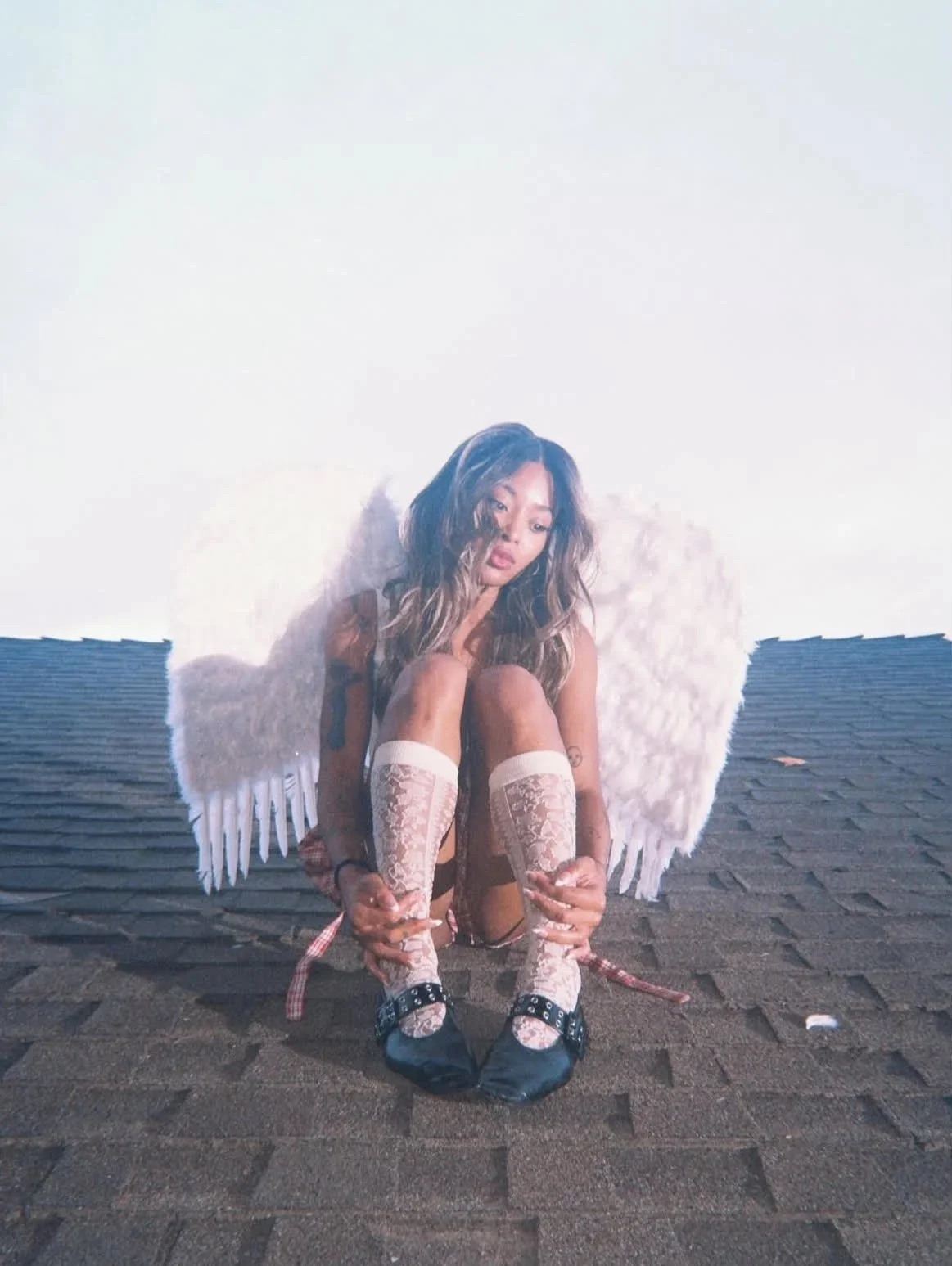
Where you’re from matters. These places made me, and when they were hurt by the fires, it felt personal not only to me, but to a lot of people.
Looking ahead, when can we expect a full-length album, and how involved are you in the production side?
Sooner than people think. I’m deeply involved, not just in the songwriting, but in the sonics, emotional and visual world around it. The album feels like a place you walk into, not just a collection of songs. A lot of my favorite artists are world builders, and I can’t imagine doing this any other way.
Are there any non-music creatives you’d love to collaborate with?
I love filmmakers and visual artists who create worlds. People like Petra Collins or anyone who treats images like poetry — Paul Thomas Anderson. I’m really interested in blending music with storytelling and film, those are the first two that come to mind, but there’s so many incredible filmmakers and visual artists I’ve put on my reference board this year!
If someone is discovering your music for the first time, what do you hope they feel when they walk away from it?
Seen. Like something quiet inside them was acknowledged. Even if they don’t fully understand why yet.
Supporting Altadena Girls is an important part of this release. How do you think about responsibility—to community, to place—when you’re sharing something deeply personal?
Where you’re from matters. These places made me, and when they were hurt by the fires, it felt personal not only to me, but to a lot of people. I don’t believe in telling stories about loss without also showing up for the people still living inside it. What do you think are the biggest challenges facing artists right now as we move into 2026?
Keeping humanity. Being human in a system that wants constant output. It’s hard to make meaningful work when everything moves so fast. That’s kind of the reason why I stepped away from music, because I realized that I’m making my life’s work and I didn’t feel proud of it. Being an artist or any creative is such a task. You really have to not know what else to do with your life. The greatest gift I think we can give ourselves is being imperfectly human as we tell our stories. Hopefully along the way comes great art.
Are there any non-music creatives you’d love to collaborate with?
I love filmmakers and visual artists who create worlds. People like Petra Collins or anyone who treats images like poetry — Paul Thomas Anderson. I’m really interested in blending music with storytelling and film, those are the first two that come to mind, but there’s so many incredible filmmakers and visual artists I’ve put on my reference board this year!
Have you had a recent “it happened for a reason” moment lately?
Losing what I thought my life was going to be. It hurt deeply, but it forced me to come back to myself and that’s where this music came from.
How do you personally define success?
Feeling aligned. Waking up and recognizing myself in the life I’m living. Feeling proud of my work. Being imperfectly human.
Can you share one of your lyrics that sums up your state of mind right now?
“no the dogs don’t bite” > Because I did this whole interview with my dog lying on my chest (:
Ha! Thank you for your time.
Photo Credit: Maya Spangler
More from Maya J’an on Substack @mayajan and Instagram @mayajan