Chicago Shapes the Sound
Ganser on Uncertainty, Control, and Their Latest Album Animal Hospital
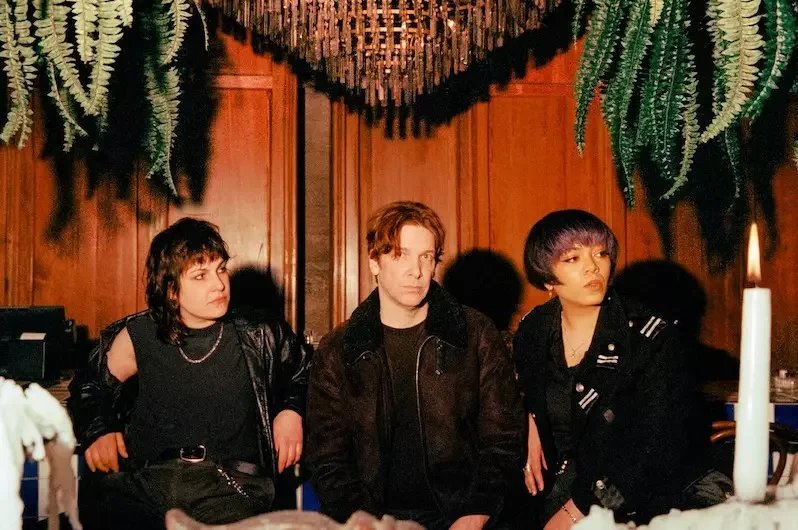
Ganser have always been shaped as much by process as by sound. Formed in Chicago and rooted in the city’s DIY scene, the band — Alicia Gaines (bass, vocals), Brian Cundiff (drums), and Sophie Sputnik (guitar, vocals) — built their early identity through repetition, constant live shows, and a commitment to doing things themselves. Over time, that approach hasn’t expanded so much as sharpened, pushing the band toward a clearer sense of focus and intention.
Animal Hospital grew out of a period of recalibration. Written after quarantine and shaped by long stretches of isolation, the record turns its attention to proximity — crowds, closeness, and the systems people move through together. The title came from signage familiar across the Midwest, ordinary words that, taken out of context, suggested a strange tension between chaos and control that carried into the writing.
The album was produced by Angus Andrew of Liars, continuing a collaboration that has become central to Ganser’s recent work. Rather than taking a traditional producer role, Andrew pushed the band to take ideas apart and rebuild them from different angles. Songs were reworked, structures reversed, and ideas sometimes scrapped entirely — a process that fit well with Ganser’s preference for challenge over comfort.
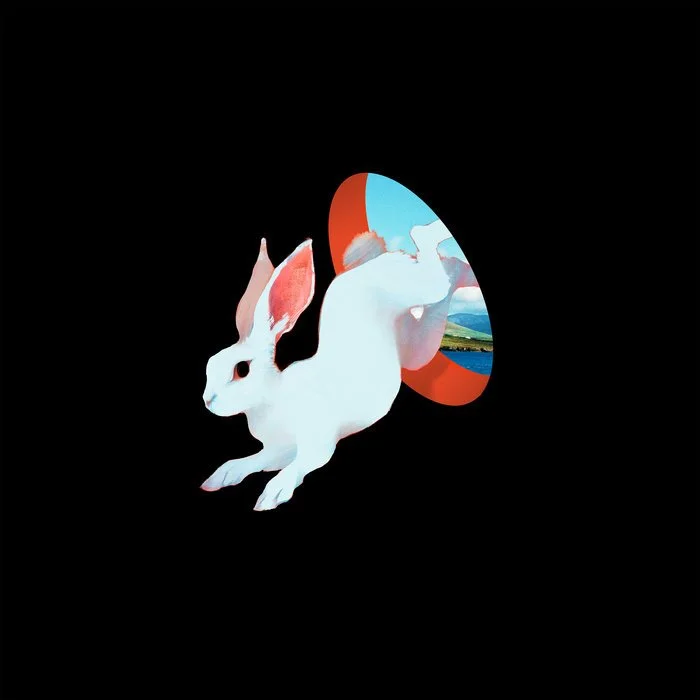
Visually, Animal Hospital remains an internal project. Alicia Gaines again handled the artwork, continuing a thread that treats the band’s visual identity as an extension of the music. The rabbit illustration on the cover, chosen early on, reflects a recurring interest in vulnerability, symbolism, and survival.
Rather than signaling reinvention, Animal Hospital feels more like refinement — a record shaped by constraint, trust, and clarity of intent. It captures Ganser moving forward on their own terms, with a sharper sense of purpose.
This conversation is with Brian Cundiff and Alicia Gaines and is part of our On the Line series.
Thanks so much for taking the time. To kick things off, where did the band first come together, and where are you based now?
Alicia: The band was formed and is based in Chicago, IL. We came up in the DIY scene here, which was very formative given the diversity of musicians.
Does the energy, pace, or even the politics of Chicago consciously or subconsciously make its way into your songwriting?
Alicia: I would say that the music perhaps has an urban energy, especially on the new record Animal Hospital. There’s a commentary on being in crowds, amongst people. Part of that came from the writing process during quarantine. It gave us time to reflect on being around people when we were around no one.
Who was the first person that got you into music?
Brian: There were several people throughout my high school years who got me into music I enjoyed playing and listening to. For me, it’s more about that era being the most formative rather than any one person.
“We’re all one step ahead of the big chomp.”
Who did the cover art for Animal Hospital? It’s so good!
Brian: Alicia created the art. She’s done every album and EP that we’ve put out.
Alicia: I basically panic for months and take a lot of notes during the recording process, and then go from there. The rabbit illustration on the cover was the first big choice. I originally trained as a painter. If we were going to put an animal on the cover of Animal Hospital, it had to match the feel of the record. Rabbits have huge symbolism and meaning across literature, folklore, cartoons, and their place scientifically in nature. I think it’s fitting that the record features a prey animal associated with everything from luck to being a trickster. We’re all one step ahead of the big chomp.
What inspired the name of the new album, Animal Hospital?
Brian: The name of the new record came from seeing signs in the Midwest, specifically in Chicago. I think the name is regional for a veterinarian’s office, but divorced from its context, they were very distinct words that reacted off each other in our notes. It brought to mind feelings of chaos vs. control, wild vs. man-made, and the title just stuck. Originally, the song “Half Plastic” was called “Animal Hospital” as a demo.
Do you remember the first song or album that had a big impact on you?
Brian: My parents got me a drum set when I was 12, and the first record I played along with was Duran Duran’s Rio. In particular, the songs “Rio” and “Hungry Like the Wolf.” I’ve carried my affinity for tom-based rhythms and dancey hi-hats with me all the way.
If someone was new to Ganser, which track from Animal Hospital would you suggest they listen to first and why?
Alicia: “Half Plastic” would be a good one to jump in with. It was one of the earlier songs we played live when it was still called “Animal Hospital.” There are themes of trying to get through your day while fascism permeates, and it quotes Starship Troopers. It’s very highbrow–lowbrow, which is a favorite place of ours to work from.
You worked with Angus Andrew again on this record. How did you originally meet and start working together?
Brian: We actually just obtained his email and cold-emailed him. Especially during 2020–2021, we learned that if you reach out to people who may be interested in you with something specific, they may just respond. We clicked right away; he was an amazing collaborator on this record and the last EP. The variety of his own work really solidified our choice. We knew Angus would get everything we threw his way, even when he told us to start from scratch, do it backwards, or turn it upside down.
You’ve played with IDLES, Amyl & The Sniffers, Bikini Kill, Viagra Boys, and many more. What would be the perfect tour package for a global Ganser tour?
Alicia: There are many bands — bands like Die Spitz, Echo Astral, Opus Kink, Lice, and more — that we’d love to have a chance to play with. Given the challenges of touring right now, a lot of bands are shooting to open for the same few large acts. Hopefully, we’ll get a chance to encounter some of these bands on the road someday.
What’s been the biggest non-music inspiration for you lately?
Alicia: Film, definitely. There’s a Venn diagram between One Battle After Another, Eddington, and Bugonia circling in my head right now, summing up the year’s themes.
Are there any non-music artists you’d like to collaborate with on something — film, merch, etc.?
Alicia: I’d love to do something with a film production company; scoring is a big to-do on our list.
Brian: As Alicia said, we’d love to do some film and TV scoring work. There are also some great animation projects out there we’re digging.
Do you have a favorite music documentary?
Alicia: I really enjoy Synth Britannia as a slice of how musical genres and creativity are generally shaped by the means through which musicians can make music. It really takes the “stand-alone genius” out of things and shows that those with the means, luck, or technology got the jump on an entirely new sonic landscape. Other musicians may find that comforting — or not.
Brian: Peter Gabriel on The South Bank Show in the UK in 1982. It’s about the making of his fourth solo record, Security. Amazing insight into his process — everything from his use of audio cassettes filled with song sketches to develop ideas, to tinkering with cutting-edge tech like the Linn Drum and Fairlight.
Are there any new artists that you’ve been excited about?
Alicia: I’m going to dodge this question completely and instead highlight some artists who have been making work for over a decade and released strong albums this year. Pile and Tortoise both released some of my favorite records this year, and the weight of their catalogs only brings more depth to their new releases.
What are the biggest challenges for artists in 2025?
Alicia: We constantly return to a refrain when things are going sideways: “Do we have a personal problem here, or is it the crushing weight of capitalism?” I think that about sums it up.
How would you define success?
Alicia: Being able to make the art that we want to make, at the scale we want to make it, without running ourselves into the ground. That could take various forms, but that’s how I evaluate it.
Can you share one of your lyrics that sums up your state of mind right now or feels representative of you?
Alicia: Brian wrote these lyrics on “Stripe” that I think of often: “Everything that we think we know is wrong, everything that we think we know is right.” It’s a constant ping-pong throughout the song that feels very of this moment. We’re all holding the fact that we have so much evidence telling us exactly what we want to hear, while also knowing that we don’t know anything — and we have to live with that.
Follow Ganser on Instagram at @ganserband