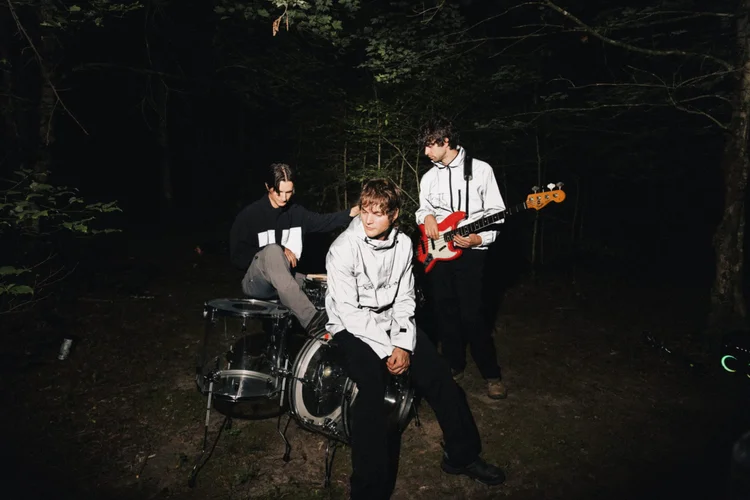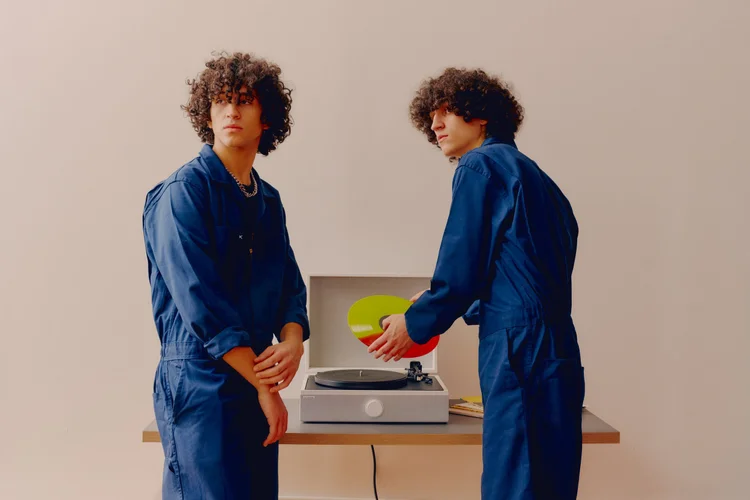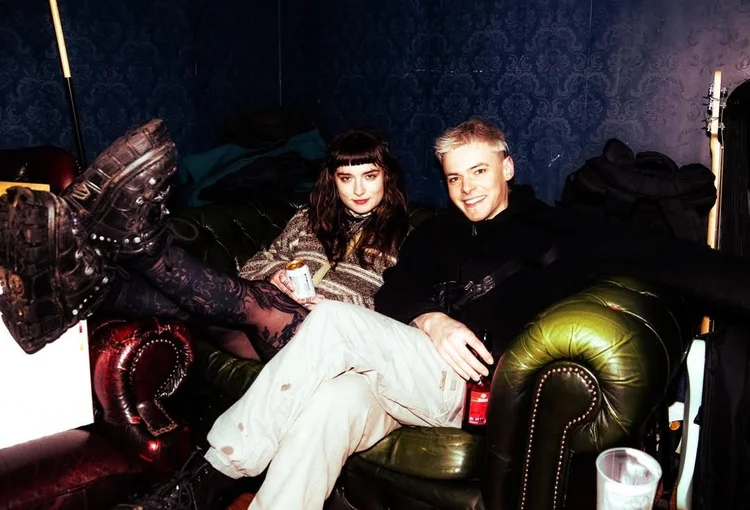
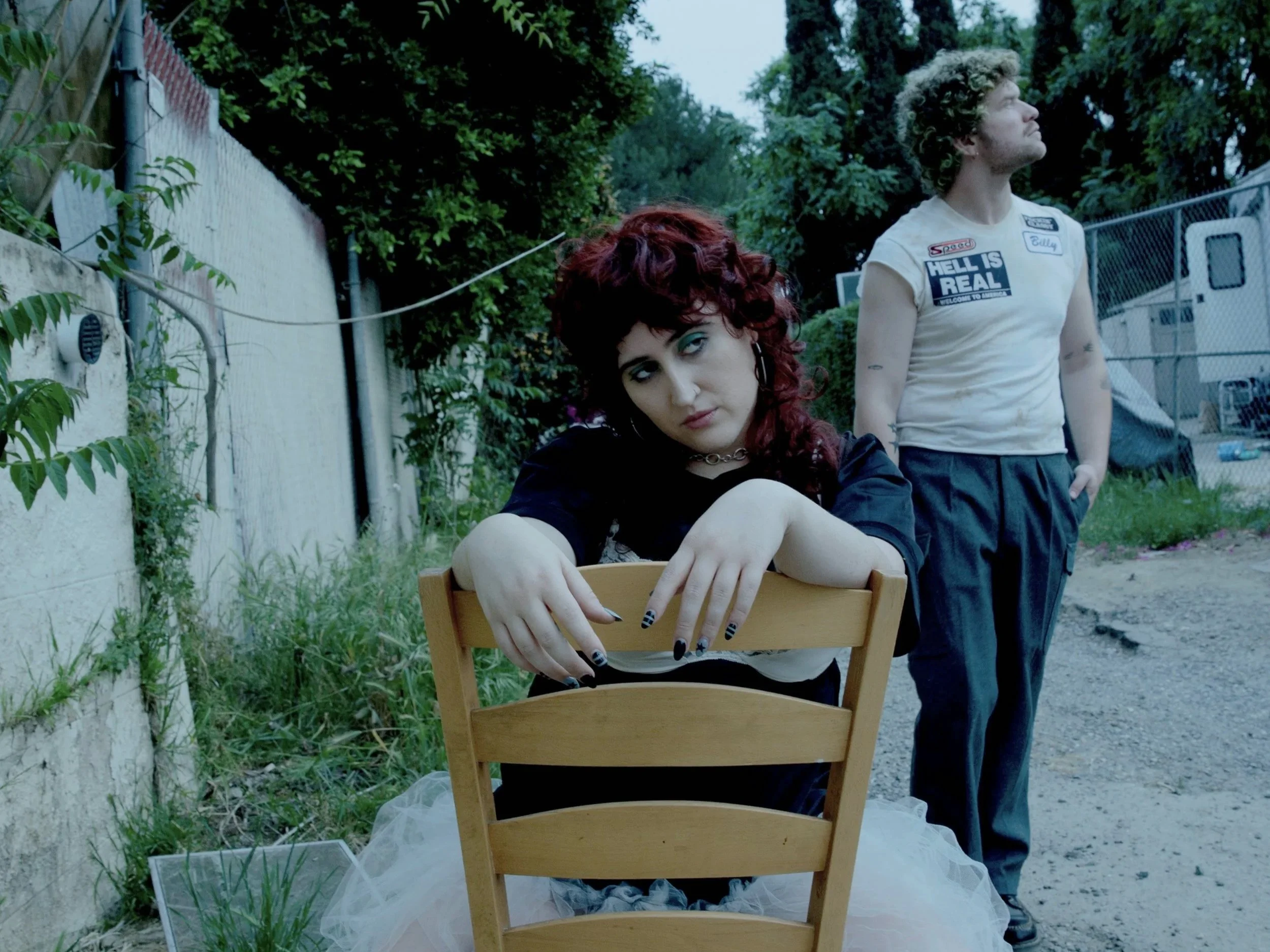
The NYC-bred duo who moved west and found themselves making their grittiest music yet
Fake Dad didn't set out to become a band. What started as a fake name attached to a college songwriting contest somehow turned into a project that's now touring North America and building one of the more distinctive sounds in indie music. Formed by Andrea de Varona and Josh Ford in New York and now based in Los Angeles, Fake Dad blend punk energy, electronic production, dream-pop melodies, and Spanglish lyrics into songs that feel deeply personal but built for a crowd. We caught up with the duo to talk about their latest single "Third Degree," the connection between punk and electronic music, the importance of live shows, and why creating music that "understands you" remains their guiding principle.
Hello! Thanks for doing this. To start, where are you from originally, and where are you based these days?
Andrea is from Miami, and Josh is from Connecticut, like 40 minutes out from NYC. We met and formed in NYC, but recently made the move out to LA (ugh, I know, so predictable).
Ha! We made the same move and we love it! How has the city influenced your songwriting or the overall sound of Fake Dad?
Our sound has evolved into something grittier and all around harder, more rock and roll, since we moved out to LA, which is kind of ironic because I think most people would say that’s more in line with the current NYC indie sound. When people first hear our music and don’t realize where we are based, they usually assume we are East Coasters, and before they hear us speak, they usually don’t think we’re from the States. Apparently, our sound is very in line with what’s going on in places like Toronto and London right now, too.
And then there’s the whole Spanglish aspect of our lyrics, which only further confuses people as to where we are from or where we are based. Being out in LA has allowed me, as a first-gen Latina, to tap back into my culture and bring the Spanish language (and, more specifically, Spanglish, which I grew up on as a Miami kid) to our music. One of the first songs we wrote out in our LA studio was actually our first Spanglish song, “So Dramatic!” That is partially because at the time I was working at a cafe where a lot of my coworkers spoke Spanish as a first language, so that’s what I would speak to them in every day (which I hadn’t done regularly since I left home in Miami). The language is just way more front of mind out here, so lyrically it comes pouring out of me with way more ease.
How did Fake Dad first come together, and when did it start feeling like there was real momentum behind the project?
We first met in college, where we started dating and then started making music together about a year or so into it. In terms of momentum, I’d say it comes in waves, and it all kind of depends on where you at in life. I remember when our first-ever Spotify editorial placements for our song “How Do I Cry?” made us feel like “oh my god, this is the moment! we did it, we’ve arrived, and we’re done now.” And that did give the project some momentum at the time, but in hindsight, it wasn’t as big for us as, say, our first North American support tour last year. It’s all a matter of perspective, I guess, and the longer we’re in it, the more we realize that part of surviving as an artist is keeping that hunger. It’s seeing momentum as a thing that feeds you but never fully satisfies you. A good meal will keep you nourished and happy for some time, but you’ll need another tomorrow to keep yourself going. The work is never done.
“The most accessible musical instrument isn't a guitar, it's a computer.”
Where did the name Fake Dad come from? (Sorry, I'm sure this gets asked a lot, ha!)
It started out as a total joke, because the band was kind of a joke. We wrote a song to submit to a songwriting contest in college, and came up with an imaginary band that wrote it. When we won the contest, we had to play a show! So the band had to become real somehow. And I guess it’s been sort of real ever since.
You’ve talked about blending electro/house music with punk energy. What artists or scenes are inspiring that crossover for you right now?
We’ve been realizing more and more lately that people these days are making computer music with the same ethos that people used to make punk music in the 70s and 80s. Back then, people were fed up with overproduced, overly shiny pop rock, and the antidote was that regular people with little musical background started making punk. It was energy forward, built on a message and an attitude instead of showiness and skill. Today, the most accessible musical instrument isn’t a guitar, it’s a computer—and we think people feel much the same way about overly shiny commercial computer music. Everyday people are injecting an edge and an attitude into electronic music, and it seems like it’s almost become the new frontier of punk.
We’re trying to find a way to bridge the old and the new, the sound of punk and the sound of electro, into one thing, as a way to draw people’s attention to this thematic overlap that’s incubating at the center of the musical conversation right now.
It sounds like “Third Degree” was shaped in part by live audience reactions. Has playing shows changed the way you approach songwriting at all?
Yes, definitely! I think playing shows has gotten us so much more out of our heads in the way we write. We’ve learned to put so much more emphasis on what’s FUN to play, and what’s FUN to hear. Not everything has to feel chronically clever and a reinvention of the wheel. It’s sort of humbling and empowering to realize that the core sounds and ideas that excite people and get them moving aren’t always the ones that make you feel smart, for writing.
You’ve said you want to make music that “understands you.” What does that actually mean to you?
When we were both growing up, there were ways that we both felt very alone. We both, individually, grew up feeling like we were born in the wrong place, or the wrong time, or at least at the wrong school (if this sounds really cliché, I think that’s the point). Music was the only thing that eased that feeling of isolation. Seeing someone like Billie Joe Armstrong or Gerard Way, wearing makeup and singing about pain, completely decimates the idea that a kid can only grow up into one kind of adult. You can be who you are. When no one understands you, the music understands you. We wouldn’t be who we are without that kind of music, and we hope we can put it back out there for the next kid.
Are there any artists — in music or outside of it — you’d want to collaborate with right now?
For sure, always! Our OG influences like James Murphy, Kathleen Hanna, and Karen O–I know they say don’t meet your heroes but fuck it. And then more current bands that we love like Mannequin Pussy, Fontaines D.C., and Slayyyter. Also, PinkPantheress seriously feels like she’s one of the best producer-artists out there right now.
In a world that can feel increasingly artificial, what’s feeling real to you right now?
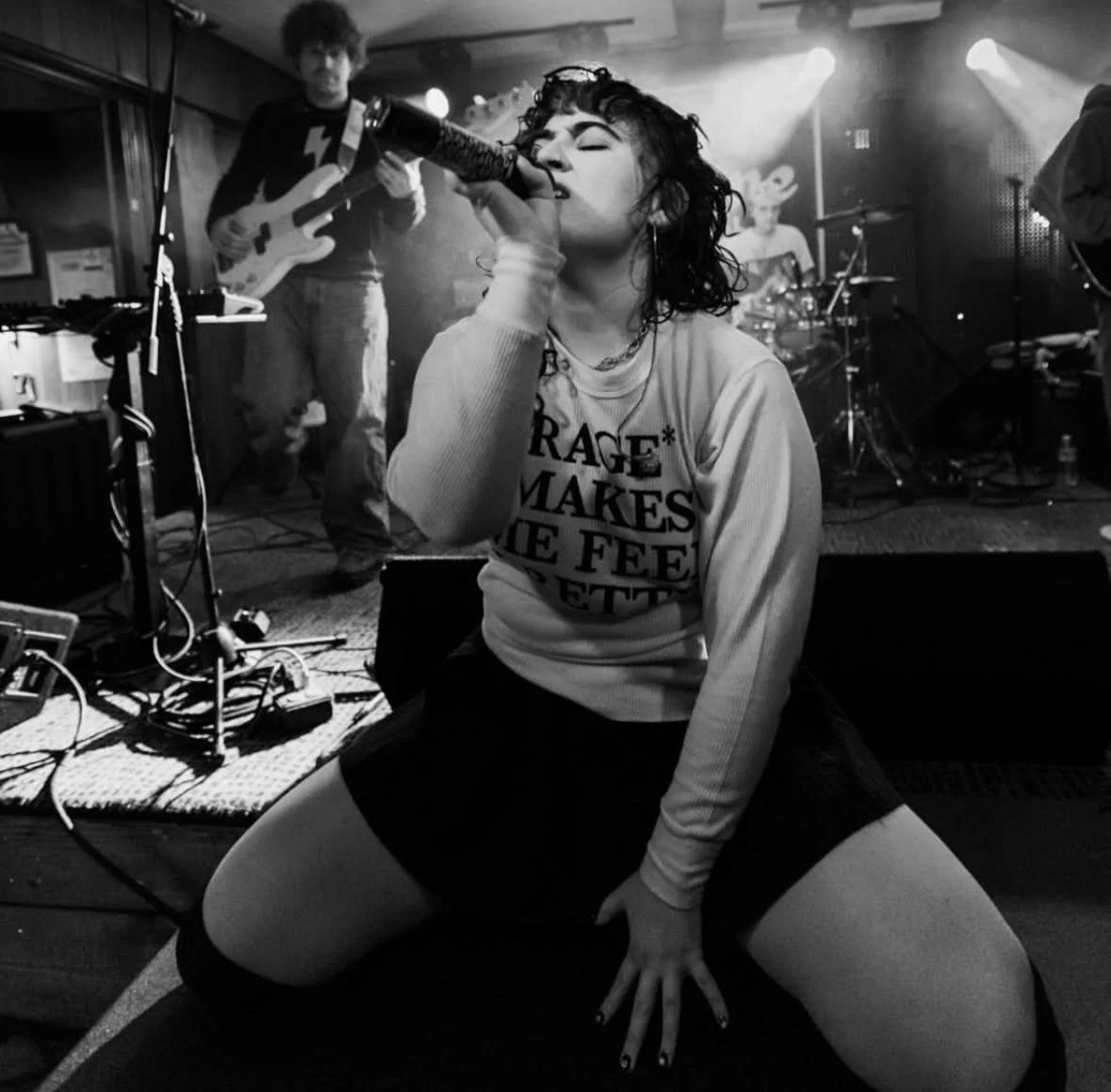
100% live music. Every day, something that used to feel genuine and personal begins to feel like a system designed to extract something from us—our time, our attention, our money, our sense of belonging…but one place where there is still no barrier between us and the people who feel the way we do is a rock show. I think we’re not the only ones feeling this way, but there’s something really viscerally organic and human and communal and sweaty about that space. TikTok comments (nice or mean) have a numb distance to them, but a person at your merch table after a show telling you that your music saved their life can shock you right out of that stupor.
Follow Fake Dad on IG at @fakedadtheband
Love photo by @auragraph_______ | Main photo by Morganne Boulden