Nice To Meet You (Vol. 4)
Nice To Meet You: Inside the Emotional Architecture of Living Hour’s Internal Drone Infinity
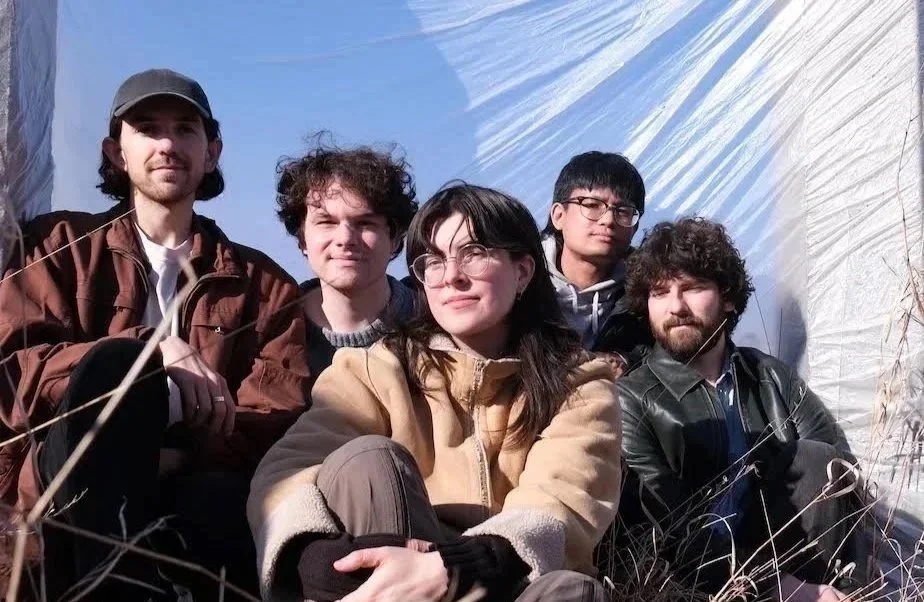
There’s a certain melancholy that comes with the long winters of Winnipeg, and for years Living Hour have been channeling it into their music. What started as a lo-fi basement project has gradually grown into something much larger. The band now moves comfortably between swirling guitars, brass, and layered percussion, but the emotional core hasn’t changed — it still feels like the same band writing songs in a basement, just on a wider canvas.
Their latest album, Internal Drone Infinity, feels like a turning point. Released via Paper Bag Records, Keeled Scales, and Beloved Records, the record expands their dream-pop and slowcore roots into something fuller and more immediate.
The album’s lead single, “Texting,” centers on the complicated feeling of home. Vocalist Sam Sarty wrote the song while trying to describe Winnipeg to someone over text — a moment that revealed just how layered her relationship with the city has become. Born in Newfoundland but raised mostly in Manitoba, Sarty sings from a place caught between roots and distance.
That tension runs throughout Internal Drone Infinity. Written during a stark Winnipeg November, the album moves between shimmering noise rock, slow-burning ballads, and warm indie pop. The band jokingly calls their sound “yearn-core,” and it fits — these songs stretch, ache, and slowly unfold.
Working again with Melina Duterte (Jay Som), who flew in just after performing on Saturday Night Live with boygenius, the band captured a sound that feels both intimate and expansive.
For this installment of Nice To Meet You, we spoke with Living Hour’s Sam Sarty about Internal Drone Infinity, the cities that shape us, and the memories that linger long after we leave them.
Hello! Thanks for doing this. To start, we’d love to go back to the beginning: what was the process that led you to writing your first song?
I learned guitar in middle school with a great Franco-Manitoban guy who loved the blues and talking about UFOs with me. He encouraged odd tunings, and I would print out Moldy Peaches tabs and bring them to learn at the lesson. Guitar felt like an instrument I could explore with — I didn’t have many friends around then, and I started to play a lot of guitar. One day I went rogue with chords and created a finger-plucking pattern in a D shape, and I would call that my first song. I think it was called “Garden.”
Do you remember the first time you shared your music online — and what that moment meant to you?
Living Hour put out our first song, “Horse Field Mansion Parties,” on Bandcamp in 2013. I remember it having some marker drawings as the cover (I think by Gil?), and our Bandcamp was so cute with more drawings. We recorded the song in Gil’s parents’ basement. I remember feeling strangely intrigued seeing our stuff in a place outside of our hands and heads and on a screen — it felt kinda naked! Vulnerable! And there was an excitement there, to have a place for people to listen to our music outside of live shows.
Was there a specific artist or moment that made you realize you wanted to make music?
Growing up, I would walk around for hours listening to music in this empty field that backed onto a runway near my house. I’d watch planes come in really low. I think this time carved out a place in me that made making music possible.
I’d listen to a lot of Godspeed You! Black Emperor, Sigur Rós, Explosions in the Sky, and imagine ambient films in my mind there and on the bus. I’d listen to The Microphones or The Social Network soundtrack by Trent Reznor and Atticus Ross, choral songs I’d be learning in school choir, or Tonstartssbandht, zoning out looking at the runway lights or taking my glasses off to see the lights turn into orbs. These artists were all huge soundtracks and inspirations for me experimenting and trying to make music.
What’s an album or song that still reminds you why you do this?
An album that I love and connect a lot of my “growing up” with is Outside the Birds Sang by Florist. I love that album — the production, the lyrics, the double vocals panned. I would blast it in my first car (Honda Civic 2003 Sport) and even drive out to Fargo, about an 8-hour round trip from Winnipeg, to see them live.
What’s a sound, sample, or texture you’re currently obsessed with?
I’m liking strange tape sounds, distortion on tape, how it can be maxed out, or bassy distortion.
What inspires your approach to writing lyrics?
I write a lot of things down in a notebook and in the Notes app on my phone. Then I’ll pull everything together in a big pile or list and pull from that — ideas and stories. Or I’ll read and let that marinate until something clicks or makes sense.
What is something you're proud of?
What’s a recent performance, film, or book that left a mark on you?
We’re currently on tour, and we have two books in the van: Portrait of the Artist as a Young Dog by Dylan Thomas and Trout Fishing in America by Richard Brautigan. Those have been nice, especially when Brautigan starts calling everything a funeral wreath. It’s comforting to have these guys along for the ride.
With film, the big wide-open aimlessness of Wanda by Barbara Loden has been sitting in my head while singing, or the long drives in Kelly Reichardt’s Old Joy with a soundtrack by Yo La Tengo (classic). More recently, images from The Maiden by Graham Foy and In a Violent Nature by Chris Nash come around from time to time — super beautiful, tense, shot-on-film, expansive Canadian movies.
What’s your greatest challenge right now — and how are you working through it?
Burnout and the idea of routine as care. It’s tough to gig and get your schedule jumbled, then get back to a steady place afterwards. Feels like I’ve been running for a bit now, and I want to recharge — make time to do nothing, then choose to do something. Figure out the plan, and see the plan as a tool for gathering up energy in a nice way.
What's one piece of advice you’d give to artists just starting out?
There’s no “right way” to do anything — just mess around and make what you want. Experimenting in the process of making music is where I’ve learned so much. If you want, or if it feels right, it is super helpful to have a community to share things with and bounce ideas off of, even if it’s just a couple of friends in person or online, or people who are your buds and “get it.” Or start a secret Bandcamp — having a bit of feedback feels great to help form what you’re making. It helps make it more tangible as well, and a mini goal like “Oh, I’ll put this on Bandcamp and maybe one person will discover it, and that would be nice” is super helpful.
What’s the biggest goal you have for your music at this moment?
I would love to pair up with a director or filmmaker in any capacity and create soundscapes for their film. I’d like to continue working on releasing a variety of EPs and albums that hold worlds and themes in them for a while (and pair them with my own films one day later).
Photo by Alex Squire
Check out Living Hour on Instagram at @livinghour